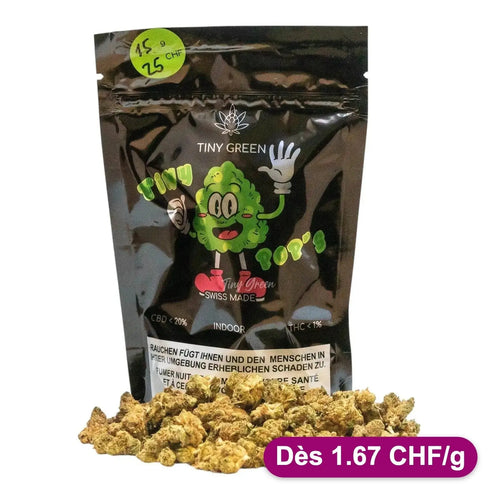


A customer came to show me the label of a bottle bought elsewhere, a bit confused. "Full spectrum" in big letters on one side, "0% THC" just as big on the other. He'd read the article we published here on the difference between full spectrum, broad spectrum and isolate, and it didn't match what he was holding. He was right to wonder.
A quick reminder of the three categories
Full spectrum is the extract as it comes from the plant, with all the cannabinoids and terpenes it contains, including traces of THC. In Switzerland, those traces must stay below the legal 1% limit, but they exist. That's precisely what makes full spectrum special: nothing has been removed.
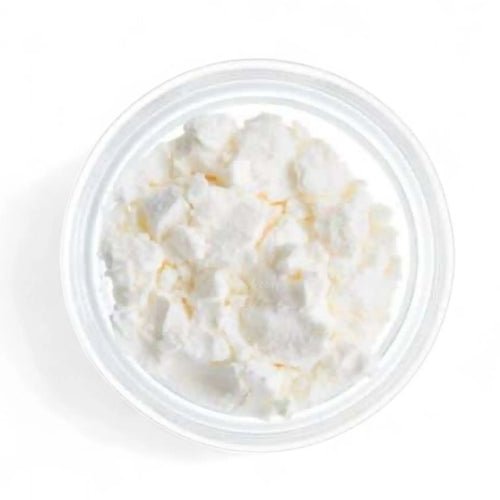
Broad spectrum starts from the same principle, except an extra step removes THC down to an undetectable level, while keeping the other cannabinoids and terpenes. Isolate goes all the way: only pure, crystallised CBD is kept, with nothing else.
Where it doesn't add up
A genuinely full-spectrum product contains THC, even in tiny amounts. It's almost a tautology: if the THC has been removed, it's no longer a complete plant extract, so it's no longer really "full" spectrum. A bottle showing 0.0% THC while claiming to be full spectrum actually describes a broad spectrum – or in some cases an isolate with other isolated cannabinoids added back to artificially rebuild a broad profile.
It's not necessarily dishonest in the strict sense. Sometimes it's marketing approximation, because "full spectrum" sounds more natural and complete to customers than "broad spectrum", a term many people don't know yet. But in practice, the two claims shouldn't normally appear together on the same label.
Why brands do it anyway
"Full spectrum" reassures about the product's quality and completeness – the idea of benefiting from the plant's full richness and the entourage effect. "0% THC" reassures about legality and the absence of risk, especially for roadside saliva tests or workplace screening. Combining both is trying to tick both selling points at once, even if the actual composition doesn't hold up.
What to look at instead of the label
The claim on the packaging only commits whoever printed it. What counts is the certificate of analysis – the famous COA – from an independent lab. It shows in black and white the THC actually measured in that specific batch, not a general estimate for the product. A good seller should be able to provide it straight away, with the batch date matching what you're buying.
If the COA shows a genuinely measurable THC value, even 0.3% or 0.6%, it's legal full spectrum in Switzerland as long as it stays below 1%. If the COA shows non-detectable, it's broad spectrum, whatever word is on the label.
"I only trust the COA now. The first time I asked a seller for the certificate and he couldn't give it to me right away, I realised the label didn't mean much." – a customer of the shop for two years
My straight advice
Never rely on the words printed on a bottle to judge its composition. Ask for the batch COA, check the THC line, and if a seller can't show it to you immediately, change sellers. Full spectrum and broad spectrum are both good products in their own way, but they're not the same thing – and a serious shop should be able to tell you which one it's really selling you. Read our guide Full spectrum, broad spectrum, isolate.