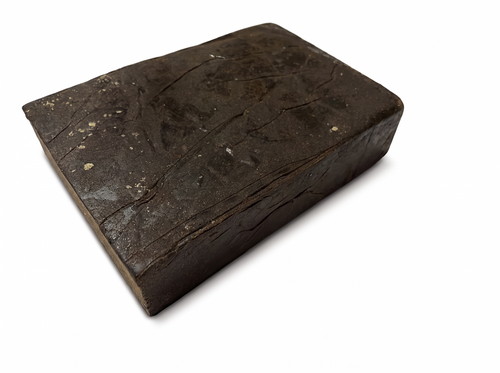
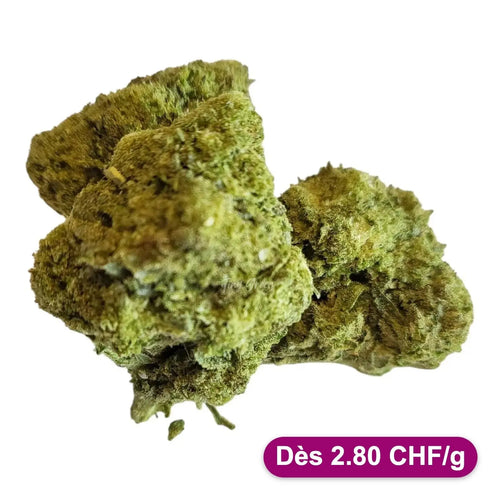
These three words come up in almost every conversation in the shop, and nine customers out of ten mix them up. Full spectrum, broad spectrum, isolate: it's not marketing – it really changes what's in the bottle. Here's how I explain it at the counter, without unnecessary jargon.
Isolate: the molecule alone, nothing else
Isolate is CBD that's over 99% pure. No terpenes, no CBG, no CBN, not the slightest trace of THC. You start from the plant, extract the cannabinoid, then isolate that single molecule by crystallisation. The result looks like a fine white powder, with no taste or smell.
It's the product I suggest to customers who take workplace drug tests, or to those who simply want CBD without the rest. The downside is that you lose what the plant offered on top.
Broad spectrum: everything except THC
Broad spectrum keeps hemp's terpenes and other cannabinoids (CBG, CBN, CBC…) but the THC is removed at the end of the process until it's undetectable. You get a product close to the whole plant, with the guarantee in black and white: 0% THC.
It's my default advice for a beginner, or for anyone subject to regular testing (professional drivers, licensed athletes, some security jobs). You keep much of hemp's richness without taking any legal or professional risk.
Full spectrum: the complete spectrum, THC included
Full spectrum is the least processed extract. Everything stays: CBD, CBG, CBN, terpenes and a trace of THC. In Switzerland, that trace must stay below 1% for the product to be legal – already much higher than the usual European limit of 0.3%. At normal doses it's non-psychoactive, but it isn't zero.
In practice: below 1% THC, nobody gets high smoking a full-spectrum flower bought from us. But that trace can be enough to trigger a positive saliva or blood test, especially behind the wheel, where Switzerland applies zero tolerance. It's the number-one question I ask before recommending full spectrum to anyone.
The entourage effect: what we really know
The term that keeps coming up is the entourage effect: the idea that cannabinoids and terpenes work better together than alone. It's a serious hypothesis, studied since the 1990s, but it's only partly documented in humans. The strongest studies mostly involve animal models or full extracts compared with isolates in the lab.
In my shop I never present it as an absolute scientific certainty. I tell customers that many report a rounder feel with full or broad spectrum than with pure isolate, and that it's worth trying both to form your own opinion. The experience is very individual.
A customer once told me: "With isolate I barely feel anything. With full-spectrum flower, it's another world." Another customer told me the exact opposite the following week. Both were right, each for themselves.
Which to choose for your situation
If you drive a lot, or are tested at work or in sport, go for broad spectrum or isolate: zero THC risk is worth more than any supposed gain in effect. If you have no such constraints and want the most complete experience, full spectrum makes sense, especially as flower or resin.
For a first purchase when you're not sure, I often suggest starting with broad spectrum. It's the safest compromise: you keep hemp's richness, without the THC risk, however small.
My straight advice to start
Don't rely on the label alone. Ask for the product's certificate of analysis (COA) – a shop should be able to show it to you without hesitation. It's the only way to check what's really in the bottle, whatever marketing term is used. Browse our Swiss CBD oils.