"Give me the strongest one, the 22%." I hear this several times a week, as if the percentage on the label were the only number that mattered. The reality is more interesting, and a customer who chooses on that criterion alone often misses a much better 15% flower.
What the percentage really measures
CBD content tells you one thing only: the concentration of that molecule in the flower, measured in a lab. Nothing more. Unlike THC, CBD doesn't cause an altered state that intensifies with the dose. A 22% flower won't get you "twice as high" as an 11% one, because that's simply not how the molecule works.
Terpenes do much of the work
What gives a flower its character, smell and much of the experience are the terpenes: limonene, myrcene, terpinolene and a dozen others depending on the variety. They work together with CBD – what's called the entourage effect. A very aromatic, fresh 15% flower can feel more noticeable than a 22% flower that barely smells and has dried out in a closed bag for too long.
Freshness: the factor everyone forgets
CBD and terpenes degrade with time, light and heat. A flower harvested six months ago and poorly stored can show 20% on its original label and have lost much of its real strength by the time it reaches you. That's why I turn over my stock quickly and store everything away from light, in airtight jars.
The numbers themselves have a margin of error
A CBD content advertised at 20% isn't set in stone. Lab tests have a margin of error, generally one to two points depending on the method, and some suppliers round up generously on their marketing sheets. I'm always wary of a flower shown at over 25% – that kind of figure needs a recent certificate of analysis to be taken seriously.
A regular customer once compared a very fragrant 12% flower with an almost odourless 21% one in my shop. He left with the 12%, and told me the following week it was the best flower he'd tried in a long time.
How I really choose in the shop
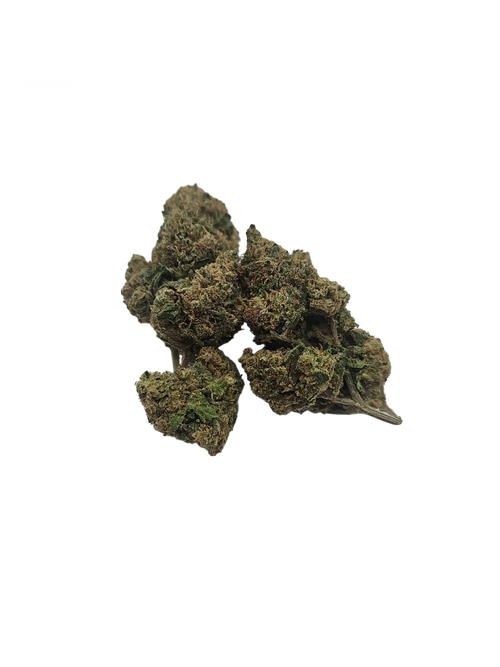
I look at the appearance first: dense, well-formed buds with visible trichomes. Then the smell, which should be clear and distinct for the variety. The percentage comes last, as one indicator among others, never the only criterion. A good flower is a coherent whole, not an isolated number on a label.
My straight advice
Don't choose your flower on the displayed percentage alone. Smell it if you can, ask for its harvest date, and trust a seller who takes the time to explain what's in the jar rather than one who always pushes the highest number. Browse our Swiss CBD flowers.