"Couldn't I just grow a plant on my balcony?" I'm asked this regularly, often with the idea that if CBD is legal, growing it yourself must be too. That's true in principle, but the practical reality is much more complicated than it looks.
What the law says in principle
Growing hemp whose THC content stays below 1% isn't covered by the Federal Narcotics Act, so in theory it's allowed. But private cultivation isn't governed by a clear federal permit: the Federal Office for Agriculture doesn't issue authorisations for amateur use, and some cantons require a declaration while others don't. There's no uniform procedure across Switzerland.
The real risk: you don't really control the THC content
This is the point most people underestimate. A plant's THC content depends on the seed's genetics, but also on the stress the plant undergoes, its exposure and even cross-pollination with an illegal cannabis plant growing nearby. Without a lab analysis, it's impossible to know for sure whether your plant stays under the legal limit. And if it goes above 1%, you suddenly find yourself in possession of a narcotic plant, even though your original intention was perfectly legal.
Why the police can't tell the difference by eye
A hemp plant at 0.8% THC looks exactly like a cannabis plant at 15%. Nobody can estimate THC content just by looking at leaves. In practice, a perfectly legal plant can be seized until an analysis confirms it's compliant – with the burden of proof on you, not on whoever is questioning you.
Certified seeds: the only real starting guarantee
If you try it anyway, only start from certified seeds from the official catalogue of low-THC varieties. It's the only way to seriously reduce the risk of exceeding the limit, though it never removes it completely. Unidentified seeds or seeds with no traceability multiply the risk of a bad surprise.
A customer tried it with certified seeds ordered online. His plant, tested out of curiosity at a private lab, came out at 1.3% THC – well above the limit – when the seed's data sheet said 0.6%. Summer water stress had been enough to push the level up. He had to destroy everything himself as a precaution.
And the cantonal declaration
Some cantons require a declaration for any hemp cultivation, even private and low-THC, while others don't for a few personal plants. Before planting anything, it's best to call your cantonal authorities directly to find out what applies to you, rather than assuming the rule is the same everywhere in Switzerland.
My straight advice
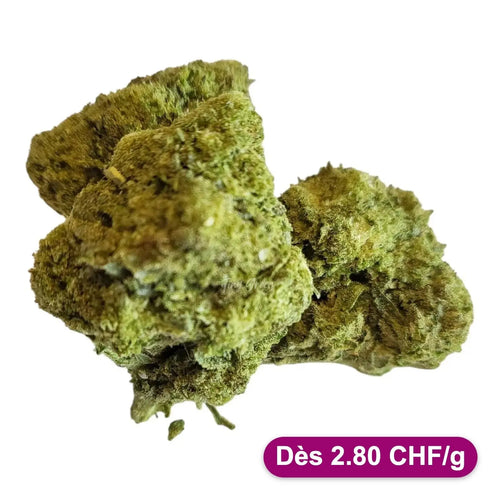
It's possible in theory, but the balance between effort, risk and what you actually save is frankly unfavourable for personal use. A flower bought in a shop is already lab-tested, with a THC content guaranteed on the certificate of analysis. Unless you have a real gardening project you're passionate about, I don't recommend starting just to save a few francs. Browse our lab-tested Swiss CBD flowers.