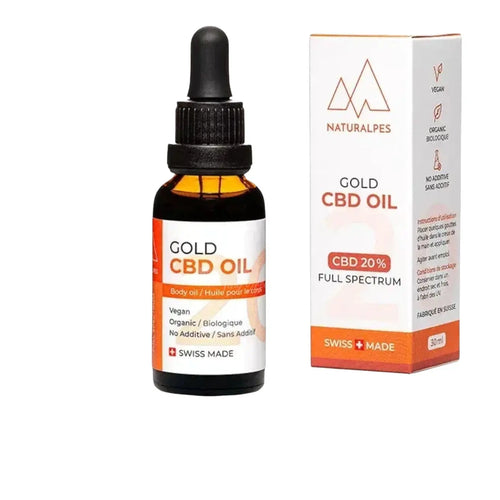
A customer once came in with a bottle bought elsewhere, convinced she had a 20% CBD product. Reading the label together, we realised the figure actually referred to the total volume, not the real concentration. This kind of confusion happens more often than you'd think.
Percentages vs milligrams
A percentage on an oil, like "10%", generally refers to the proportion of CBD in the whole bottle. But some brands prefer to show a total amount in milligrams, which gives far more impressive numbers on the label without changing the real concentration. To compare two products, convert both figures to the same unit before judging.
Check for a lab analysis
A serious label usually points to an independent lab analysis, accessible via a QR code or batch number. This analysis confirms the real CBD and THC content and the absence of contaminants such as heavy metals or pesticides. If this information is completely missing, be suspicious – especially for products bought online from abroad.
Look for the expiry date and batch number
CBD degrades over time, especially when exposed to light and heat. A complete label shows an expiry or best-before date, plus a batch number to trace production. A product with none of these is often a sign of careless manufacturing.
"I only ever looked at the percentage before. Since Cyril explained how to read the rest of the label, I realise I was missing much more important information."
What we always check before selling a product
At Tiny Green, we only stock products for which we can show the lab analysis if a customer asks. It's a non-negotiable criterion, before we even discuss price or taste.
If you have a product whose label you can't decode, bring it to our shop in Yverdon-les-Bains and we'll go through it together.