A customer compares the price of our 20% oil with one he saw in France, about 30% cheaper. "It's the same product, isn't it?" Not really. The difference isn't about marketing – it comes from a precise number written into law, and a ten-year gap in how the industry developed.
A THC limit that changes everything
In Switzerland, a CBD product stays legal as long as it contains less than 1% THC. In France, the limit drops to 0.3%. That may sound minor, but it directly determines which hemp varieties can be grown and sold. With a margin three times wider, Swiss growers have access to genetics richer in cannabinoids, including CBD, without ever exceeding the legal limit. In France, the 0.3% constraint pushes towards more limited varieties, selected mainly to stay under the limit rather than for their richness in active compounds.
A ten-year head start matters
Switzerland legalised hemp cultivation for legal use back in 2011, almost a decade before most of its European neighbours. That head start gave Swiss growers time to develop agricultural know-how and extraction expertise that younger industries haven't yet caught up with. The Alpine climate and Swiss environmental standards, stricter than elsewhere in Europe, also play a role in the final quality of flowers and extracts.
What the price really reflects
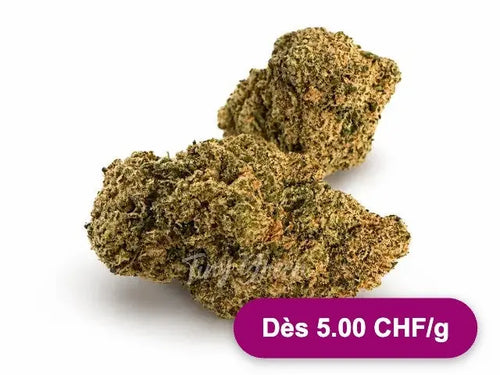
Premium Swiss CBD is generally priced 20 to 40% above French prices. The gap comes from Swiss labour costs, stricter environmental standards and higher-quality genetics that cost more to grow and extract. It's not about a Swiss flag on the label: a cheaper product isn't necessarily a bad one, but it rarely has the same production costs to cover.
Crossing the border with Swiss CBD
One point many customers don't know: a Swiss product with between 0.3% and 1% THC is perfectly legal here, but may be considered illegal in France or other neighbouring countries. Serious shops adapt exported products to the destination country's limits, but if you buy here to take home across the border, check the exact level on the lab analysis before you leave.
"We're often asked why we don't lower our prices to compete with what's sold in France," says Cyril Piaget, founder of Tiny Green. "The honest answer is that we can't sell at that price without changing suppliers – and that's something we refuse to do."
Cheaper CBD isn't a bad choice in itself, especially on a tight budget or for occasional use. But comparing prices without comparing the permitted THC level, where it's grown and whether a lab analysis is available means comparing two products that, deep down, don't have much in common. Discover our Swiss CBD flowers and Swiss CBD oils.