

A very serious trail runner asked us whether taking CBD could cause a positive test in competition. The short answer is no, for CBD itself. The full answer needs a little more nuance.
CBD has been off the list since 2018
The World Anti-Doping Agency removed CBD from its list of prohibited substances in January 2018. Since then, it's allowed both in and out of competition, for all sports governed by the World Anti-Doping Code. This position hasn't changed since, and nothing suggests it will.
What few people know: THC is still banned
The detail most athletes don't know is that THC remains on the list of substances prohibited in competition, with a urinary threshold of 150 nanograms per millilitre. And since most so-called full-spectrum CBD products contain legal traces of THC, heavy, repeated use could in theory build up enough THC to approach that threshold, even though it's unlikely at usual doses.
What we recommend to competitors in practice
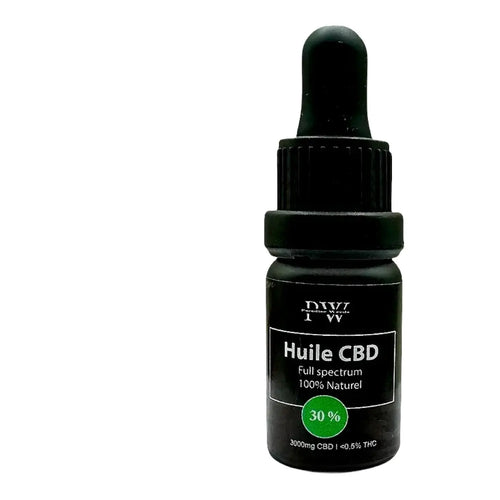
For an athlete taking part in official competitions, the advice is simple: choose a CBD isolate, with no trace of other cannabinoids, along with an analysis certificate from an ISO/IEC 17025-accredited lab confirming 0% THC. It's the only way to remove the risk completely, even in theory. Swiss Sport Integrity, Switzerland's anti-doping reference body, also advises athletes to remain cautious with cannabis in general, CBD included, as long as the product's exact composition isn't guaranteed.
"When a customer tells us they compete, we always point them to isolate, never full spectrum," says Cyril Piaget, founder of Tiny Green. "Even if the risk is small, it's not worth taking for someone whose sports licence is at stake."
And for an amateur, without official competitions
If you do sport without ever being anti-doping tested, this distinction has no practical consequence. The issue only arises in competitions governed by the World Anti-Doping Code, with real tests involved.
CBD itself hasn't been an anti-doping issue since 2018. The real point to watch is the trace of THC that often comes with it in full-spectrum products – and that detail makes all the difference for an athlete in competition.