
People often ask us "CBD is legal, right?" as if it were a yes-or-no question. In Switzerland the answer is yes, but with several precise conditions that determine what's really allowed, from the age to buy to the tolerated THC level. Driving is part of the picture, but it's only one point among others.
The key criterion: less than 1% THC
The Federal Narcotics Act classifies any cannabis product containing 1% THC or more as a narcotic. Below that threshold, the product falls outside that law and becomes an ordinary CBD product. It's this number, more than the word "CBD" itself, that determines whether a product is legal in Switzerland.
The minimum age, often overlooked
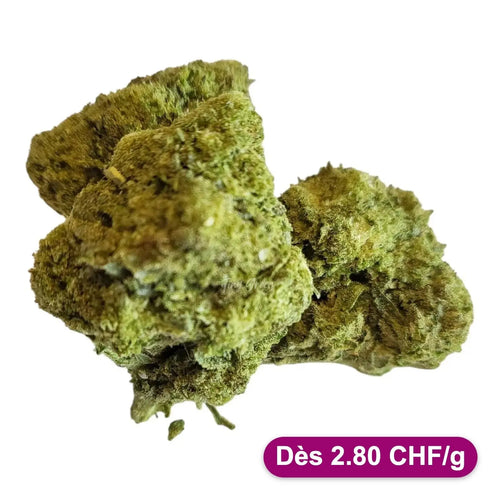
Since 1 October 2024, the federal law on tobacco products and e-cigarettes also covers products treated as tobacco substitutes – a category that includes CBD flowers and some vaping products. In practice, this means sale to minors is banned throughout Switzerland, just like regular tobacco. Many customers are surprised to learn this rule exists, assuming that because CBD isn't psychoactive, no age limit applies.
One molecule, several different laws
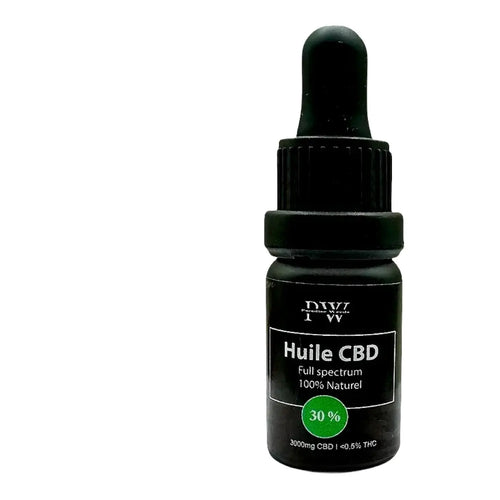
This is probably the least understood point: depending on the product's form, a different law applies. A CBD oil may fall under food law. A cream or balm falls under cosmetics law. A flower or vaping product falls under tobacco law. This regulatory patchwork explains why two CBD products can have different labelling or sales requirements even though they contain the same molecule.
"Most customers think there's a single CBD law," says Cyril Piaget, founder of Tiny Green. "In reality there are several that overlap depending on what you buy, and it's our job to know which one applies to what."
Traceability and lab analyses
A serious CBD product should be able to prove its exact THC content with an accessible lab analysis, often via a QR code on the packaging. It's not a formality: it's the only way to prove, if checked, that a product stays below the legal limit.
And what about driving?
Driving is a special case, governed not by the product's THC content but by the blood limit of 1.5 micrograms of THC per litre of blood. A product that's perfectly legal to buy can therefore, in some circumstances, cause problems behind the wheel. It's a specific enough topic to deserve its own article, which we've already published on this blog.
So the legality of CBD in Switzerland depends on several combined criteria: THC content, the buyer's age, the product's regulatory category and documented traceability. Knowing these four points avoids most of the misunderstandings we hear in the shop.